

Museums never push back. The person across the table might.
We revere the artifact….and tend to forget about the humans that give those artifacts meaning.

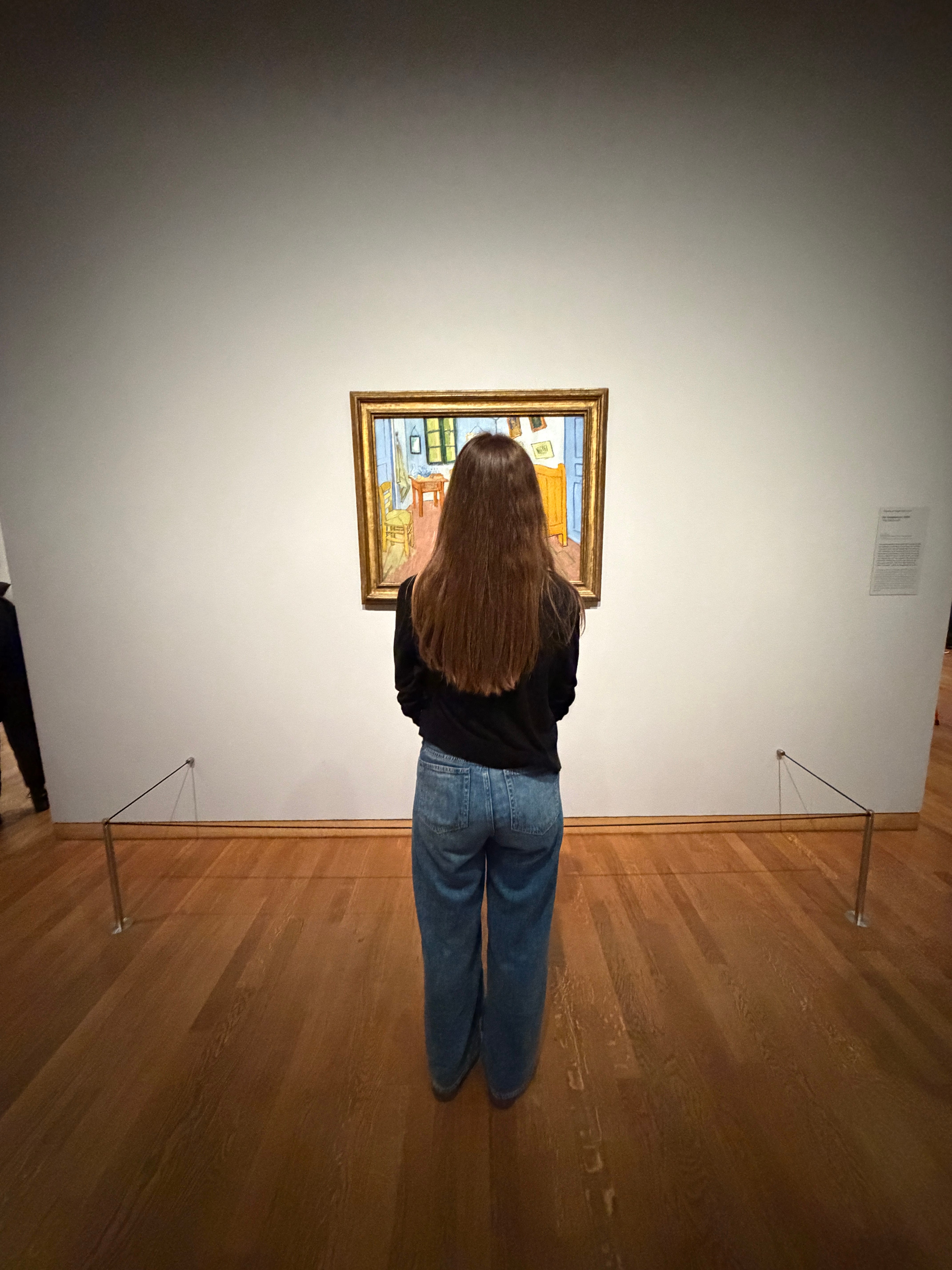
On our last morning in Amsterdam, Heather and I were in an Uber headed to Schiphol Airport. We were tired in that good way: the kind that comes from walking 20,000+ steps every day around a city for 3 days straight. We were only here for 3 days. The type of length where you soak up every minute and never quite acclimate your body to the local time zone. So, yeah, we were a little tired.
Our driver asked if we’d enjoyed ourselves and of course we did, and then we started talking. We talked about kids and life and his experience teaching political science in a past life. and then he said:
“You know what’s strange? We put old people in nursing homes and we forget about them. But if you find something old in a museum, you stop and stare and try to learn something about it. You treat it like it matters.”
Yo. That was deep.
Note: I really wanted to extend out the “Yo” in a long drawn out “Oh-man-what-a-profound-statement-that-really-made-me-think-differently-and-it-just-hit-me-it-was-such-an-important-type-of-statement” type of way but if i typed “Yoooooooooooooooooooo” I feared it would read like Yoo-hoo. Carry on.
That’s a particular kind of conversation that only happens when you’re in a car going somewhere.
Think about that for a second. We have entire institutions dedicated to old things. We climate-control them. Write plaques about them. Keep them behind glass. A piece of pottery from 400 BCE gets its own spotlight and a paragraph about cultural significance.
An 80-year-old who actually lived through things gets a room with a television and visits on holidays if he’s lucky. We seek wisdom in things yet there are people with wisdom that never get asked to share it.
The difference, as far as I can tell, is that the pottery doesn’t ask anything of us. It just sits there. An elder doesn’t work that way. They’ll tell you what they actually think. They’ll remember something inconvenient. They’ll hand you a perspective you didn’t ask for.
We call that a lot. We make arrangements.
Here’s where Amsterdam comes in, because the last 3 days taught me a version of the same thing.
Heather and I had both seen the canals before: in photos, in movies, in the kind of travel content that’s so abundant now that a place can feel pre-experienced before you even get there. I watched The Fault in Our Stars and thought about kissing her at the famous bench.
We knew what Amsterdam looked like. We understood it, in that abstract way you understand things you’ve only seen on a screen.
And then we actually walked across a bridge that first morning and none of that mattered.
The light off the water. The sound of bicycle bells coming up behind you on a narrow bridge and the little sidestep you do to get out of the way. The cobblestones and uneven sidewalks. The way your feet feel after thirty bridges. None of that is in the photos we took…and we took good photos ;)
You can document an experience. You just can’t transmit it. Something always stays behind.
What our driver was pointing at isn’t just about how we treat old people: though it is that, and it should bother us more than it does. It’s about what we think wisdom is actually for. And how we seek it out.
We want wisdom preserved, labeled, and at a comfortable distance. Something we can visit on our own schedule and leave when we’re done. What we’re less comfortable with is wisdom that talks back. That has opinions. That might look at what we’re doing and say, I’ve seen where that goes.
The museum works for us because it never pushes back. The person across the table might.
At the Van Gogh museum we inspected the thick brushstrokes of some of his most famous paintings. At the Anne Frank House, we looked at the preserved pages of Anne’s famous diary. We treated these artifacts with care and respect. But what we would give to also sit down next to the people that lived through those times!
I remember in 1984, visiting the USS Arizona Memorial at Pearl Harbor for the first time. Thousands of tourists shuffling onto a ferry to step foot on the floating memorial. And then when coming back to shore, seeing actual veterans from that battle, now in their 60’s and 70’s, sitting at tables answering questions for just a couple of people brave enough to speak to them. I was lucky enough to visit Hawaii for the first time as a 9 year old. But this was only because my grandfather passed away suddenly while living there. We were there for his funeral.
He was a man I only knew briefly. I can count on one hand the memories I have: the time he brought me into a storage room in his house in New York City and told me I could pick out a Matchbox Car from his bin of unopened toys he had (most definitely) purchased for this exact moment. The time we walked together down the street from my house in Malvern, PA when I was 5 to eat at Wendy’s and he let me order anything I wanted. And then when we came home, he got scolded for eating the hamburgers and fries (due to his diabetes) by my grandmother. And finally, the time he proudly showed off his “World Radio” to me explaining that he could get radio signals from stations all over the world.
My mom tells me I get my desire for cutting-edge gadgets and my sense of humor from him. What I would have given to be able to talk to him as an adult. About the things he had seen. The decisions he made.
We revere the artifact….and tend to forget about the humans that give those artifacts meaning.
There’s a drive to read, research, and sometimes pontificate….in private. But far more hesitancy to talk about such subjects when there is a person across the table from us.
We subscribe to the algorithms that make us feel seen because of course they do. That’s what makes them so addictive. But when it comes down to having these discussions in person, we hesitate.
We agree to not bring up the real topics that matter at family gatherings. We do this to prevent arguments and reopen wounds. That may be common sense. That may be intelligence. But it isn’t wisdom.
Intelligence is a catalog of facts. But having conversation is not information. It’s the lived synthesis of information through experience, failure, love, and time. An 85-year-old grandmother can’t be digitized. The way she understands regret, or patience, or what actually matters… that only exists in her, and it only transfers through presence and relationship.
And she may have vastly different opinions that you do. But isn’t it important to sit down and learn more about why?
I don’t have a tidy conclusion here. I’m not going to tell you to call your mother, because you already know whether you should be doing that and why you’re not.
What I keep coming back to is this: Heather and I are home now, and we’re already editing the trip into its best moments. We’re already skipping the inconvenient parts and summarizing into the highlights. After all, when someone asks how our trip was, we don’t want to bore them with the near-misses with bicyclists or how in the very first hour I managed to drop toppings off my gourmet stroopwafel on the ground. We talk about the postcard moments.
It’s the reflections of the buildings off the water. The tulips. The cheese. The chocolate. It’s that great meal on the second night.
All of it is real. None of it is the whole thing.
The whole thing was being there. Showing up, with your full attention, in a place that didn’t care whether you’d googled it first.
That’s also what it means to spend real time with someone who has lived a long time. You show up. You put the phone down. You let them tell you something that doesn’t fit neatly into what you already think. You may also learn to understand their perspectives…even if it vastly differs from your own.
The pottery is worth preserving, sure. But it doesn’t know your name. And it doesn’t know where you came from.
Another great piece. I wish, more than anything, for an hour with any one of my grandparents or their siblings to hear their stories one more time. They were all so good about story telling when I was growing up, I don't think I paid as much attention as I should have. Thank you - such a good one.