

Does Authenticity Require Wounds?
The Myth of Necessary Damage

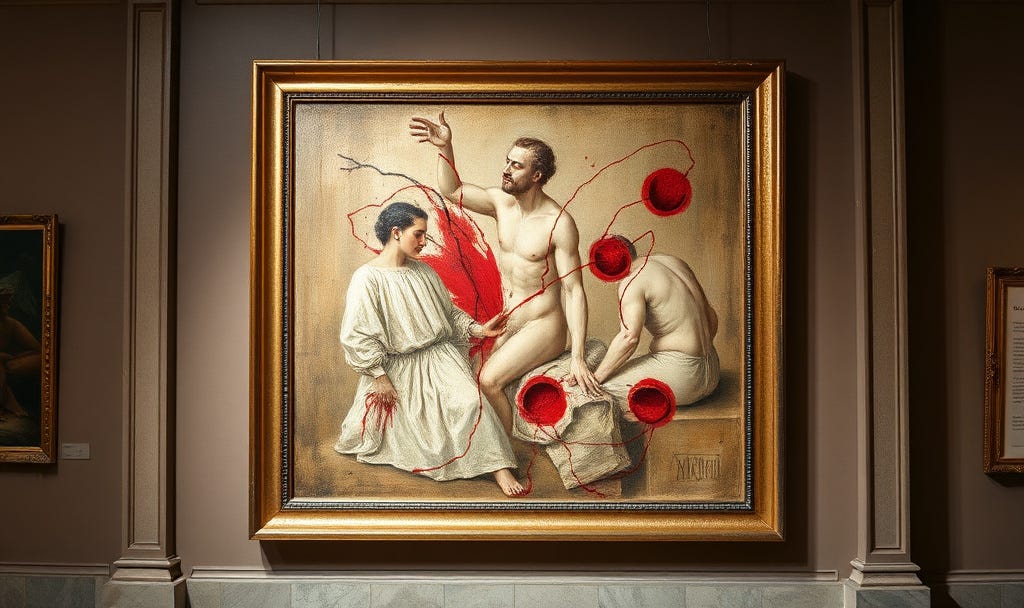
In high school, I tried writing poetry.
I didn’t think it was good, but more importantly, I thought I understood why. I knew about Sylvia Plath. I read about tortured souls.
Poets with trauma.
People who had something true and terrible to say. The subtext of every lit class was clear: damage is the raw material of art.
“Authenticity requires wounds.”
When I got to RISD, that feeling only deepened. My classmates arrived with their work already rooted in something real: things like identity trauma, neglect, abuse, and/or the weight of mental illness carried into the studio and into their work. Their pieces seem to matter more because they had something to exorcise. They were digging down into the hard places and it showed.
And all I had? ... curiosity. Decent observation. Hands that could make things. But no foundational pain to justify the work. Sure, bad things had happened to me. I had heartbreak, self confidence issues, some bullying. some racism. But my art wasn’t driven by toxicity. It was driven by the desire to see what I could make, to understand form, to play. I felt this lacking as if my work would always be superficial because it came from the wrong place.
The myth I believed in was this: great art requires great suffering. The corollary was obvious. No suffering, no art that mattered. If you weren’t driven to cut off your ear or stick your head in an oven, maybe, you weren’t able to unlock greatness. Or maybe in less devastating ways, at least produce any type of art with any sort of remarkability.
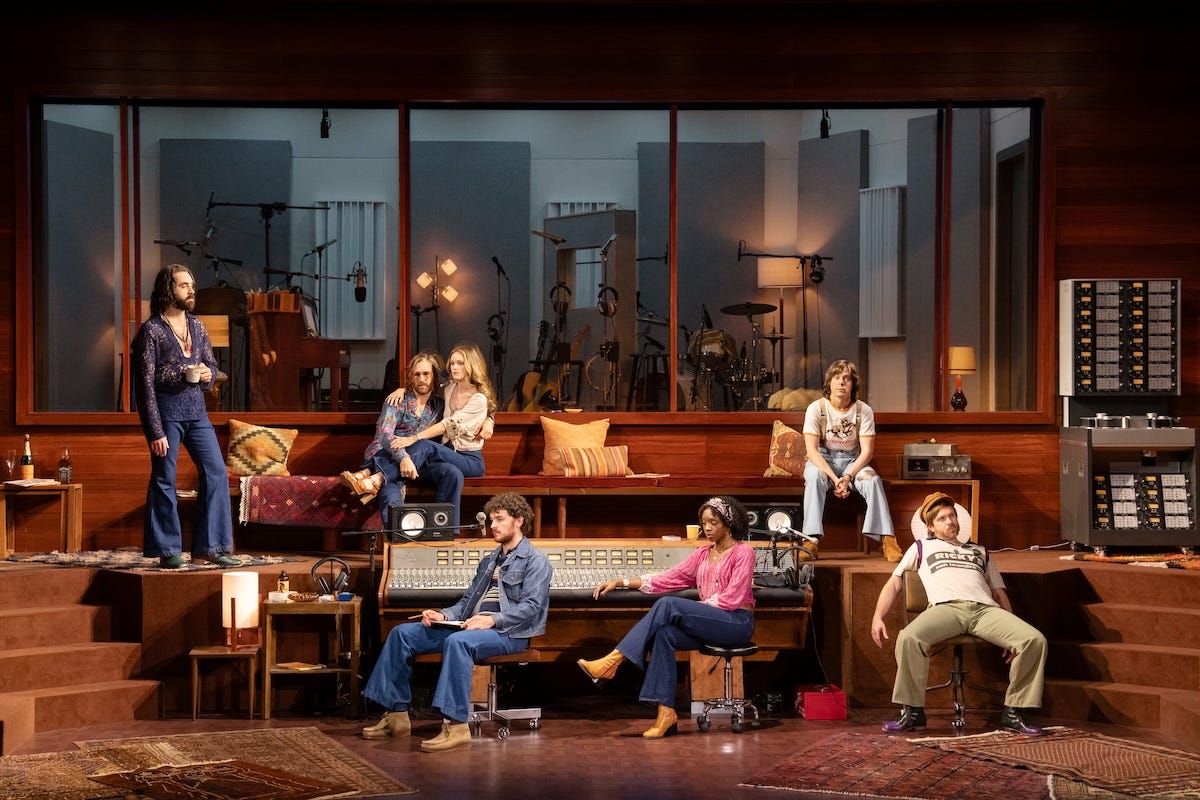
Heather and I finally saw Stereophonic last night. For those unfamiliar, Stereophonic is a Tony Award winning play based that is a fictionalized version of how Fleetwood Mac’s Rumours was recorded. And just in case this needs to be said, Rumours is amazing and is widely considered the most influential rock albums of all time. I have been interested in seeing this show since I first heard about it a few years ago when it was still playing on Broadway so when it was announced it was coming to Durham and was part of the Durham Performing Arts Center season this year, I circled it twice on my calendar and put a “DO NOT TRAVEL” (yes in all caps) block for the day before and the day after.
I knew about the premise and the mythology and the history before I saw the show. But there is something about the experience that was deeper. The way the play argues for creative genius despite dysfunction rather than because of it. This cracked that old “Authenticity requires wounds” belief open.
The band in the play is a wreck. Peter (who echoes Lindsey Buckingham) and Diana (echoing Stevie Nicks) are imploding. Bandmates are divorcing or are apart from their kids. People are reeling from betrayal. The cocaine is everywhere. The sessions stretch on for nine months because no one can hold it together long enough to finish. They’re screaming at each other between takes. They’re breaking things. They’re making terrible decisions because they’re broken, high, angry, and desperate.
And somehow impossibly and almost inexplicably they’re making a masterpiece. The most elegant pop-rock album ever recorded is emerging from pure chaos.
The play doesn’t romanticize this. David Adjmi the playwrite isn’t arguing that the pain makes the album great. He’s showing something more unsettling: the pain happens to be there, and somehow the genius is also there, and the two coexist without one explaining the other. The album isn’t great because they’re suffering. The album is great because they’re brilliant, and they happen to be suffering while the brilliance happens to emerge.
There’s a moment in the first act where the engineer (arguably the protagonist) who gets to watch all of this from the control room is transcribing something, hearing it clearly, seeing the shape of something genuinely beautiful being formed in real time. The wreckage is still happening. Nothing is solved. But in that moment, he’s witnessing something that has nothing to do with the pain. He’s witnessing the thing the pain just happens to be adjacent to.
That distinction matters. It matters a lot.
Because if great art requires great suffering, then the inverse must also be true: without suffering, your work can’t be great. Which means everyone who comes to their art from curiosity instead of compulsion, from play instead of pain, is fundamentally disabled. We’re missing the essential ingredient.
But what if that’s not true?
What if the suffering is just one possible context for creating, not the source of creation? What if the form doesn’t require the wound?
I think about the younger version of myself in RISD, sitting in critiques, listening to my classmates talk about what drove their work. The specificity of their pain was real and it was potent. And I was envious of it in a way that was almost toxic.I was not envious of the pain itself, but envious of the permission they seemed to have. Their work mattered because it came from somewhere true and dark. My work would always be arguing from a different place.
What I didn’t understand then is that curiosity is also a wound. Wanting to make things, wanting to understand how things are structured, wanting to translate the world into form? That’s not less authentic than being driven by trauma. It’s just a different kind of hunger.
The problem is that trauma is more legible. It has a clear shape. You can point at it. Your work speaks back to it directly. The audience understands what they’re looking at. And just maybe, there is a sort of release or therapy in putting it out into the world.
But curiosity is quieter. The work it produces is about discovery, about craft, about seeing what’s possible. And those things can feel less important in a culture that mistakes intensity for significance.
Let’s take two contemporary filmmakers: David Fincher and Lars von Trier. I believe that both are brilliant. Both have made some of the most visually striking and thought-provoking films of the past twenty years.
But their creative origins are super different.
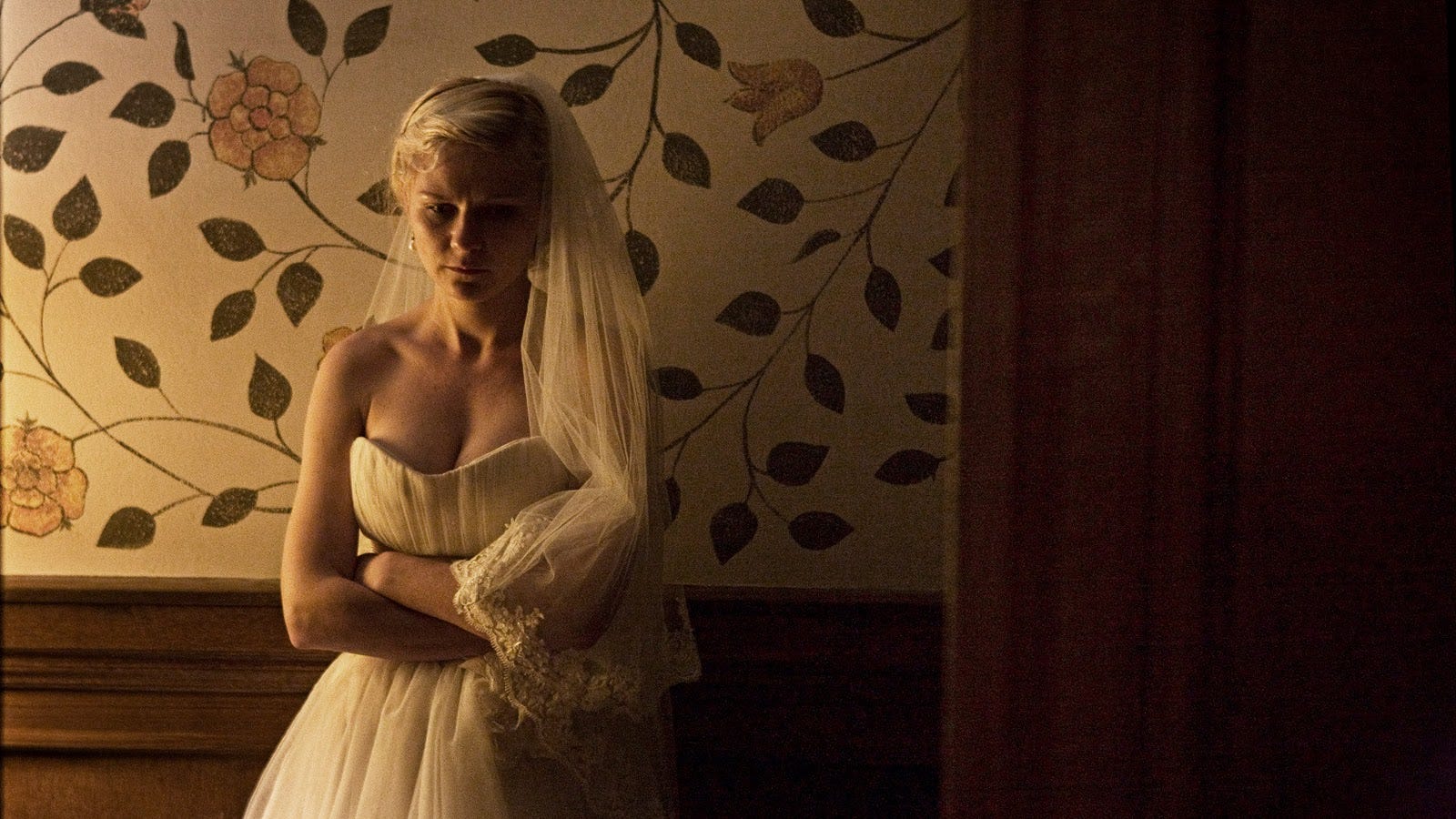
Von Trier has been upfront about his depression and psychological darkness driving his filmmaking. His films (Melancholia, Antichrist, Nymphomaniac) known as the Depression Trilogy, confront pain and wreckage pretty directly. And the work feels indistinguishable from his suffering. You watch his films and you understand that the darkness had to come from somewhere real and broken inside him. Note: Von Trier has also had a ton of controversy for past anti-semitic remarks and it’s also super hard sometimes to separate the man from the work objectively.
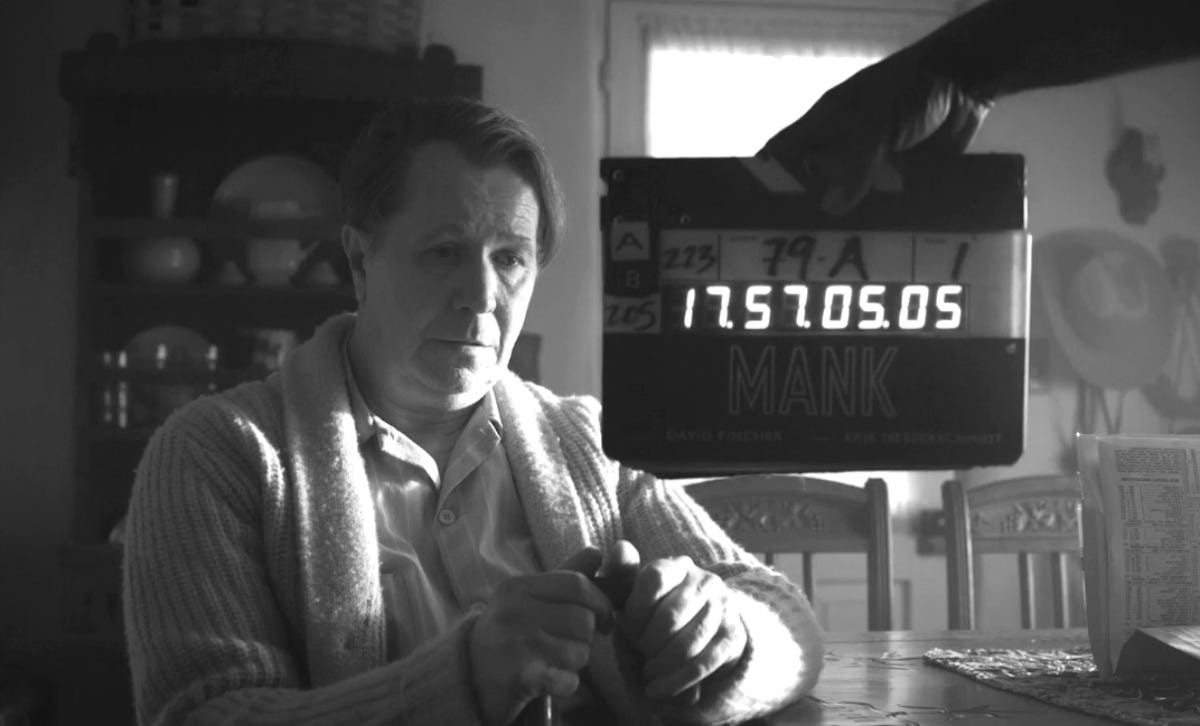
Fincher, by contrast, (full disclosure a favorite of mine) is obsessive about precision and control. His films are dark, yes, but the darkness comes from his vision and his interests, not from him pouring his wounds into the frame. He's interested in how systems work, how power operates, how to craft a perfect shot.
His genius is about mastery, not catharsis.
Both directors prove the point: brilliance doesn't require damage. It just sometimes coexists with it. Von Trier needs to bleed into his work. Fincher needs to understand it.
And here’s what Stereophonic showed me: the band is magnificent because five people brought their full creative selves to a studio. Peter’s obsession with perfection. Diana’s melodic instinct. Holly’s warmth. Simon’s leadership. Reg’s precision. These are what they brought to the work. The fact that they were also destroying themselves emotionally is a separate story that happened to be running parallel.
The masterpiece isn’t the product of the pain. It’s the product of their genius, happening to exist in the same room as the pain.
And if that’s true for them, then maybe….maybe…hopefully?….it’s true for me too. Maybe my work doesn’t need to be forged in suffering to be real. Maybe the curiosity is enough. Maybe watching, learning, trying to understand how things work, wanting to make something that didn’t exist before? Maybe that’s sufficient permission.
I spent years waiting for the wound to deepen enough to become an artist. Waiting for my trauma to be significant enough. Waiting for damage to give me the right to create.
What a waste of time that was.
The engineer, Grover, in Stereophonic is the real hero of the story. He’s not the tortured genius. He’s not the one with the wound. He’s the one who shows up and pays attention. He listens carefully. (Sometimes he takes abuse) He positions the microphone exactly right so that each instrument sounds like itself. He’s the one in the control room watching the masterpiece form, and he’s doing that work not because he’s broken but because he cares about getting it right.
And his contribution is as essential as anyone’s in that room.
The myth I was carrying? That damage is a prerequisite? Well, it was never true.
It’s just more visible.
It’s more dramatic.
It’s easier to understand as a narrative. But it’s not the only narrative. Not the most important one.